Home Extension Budget Checklist
A practical step-by-step guide to home extension budget checklist, including preparation, instructions, common issues, tips, and next steps.
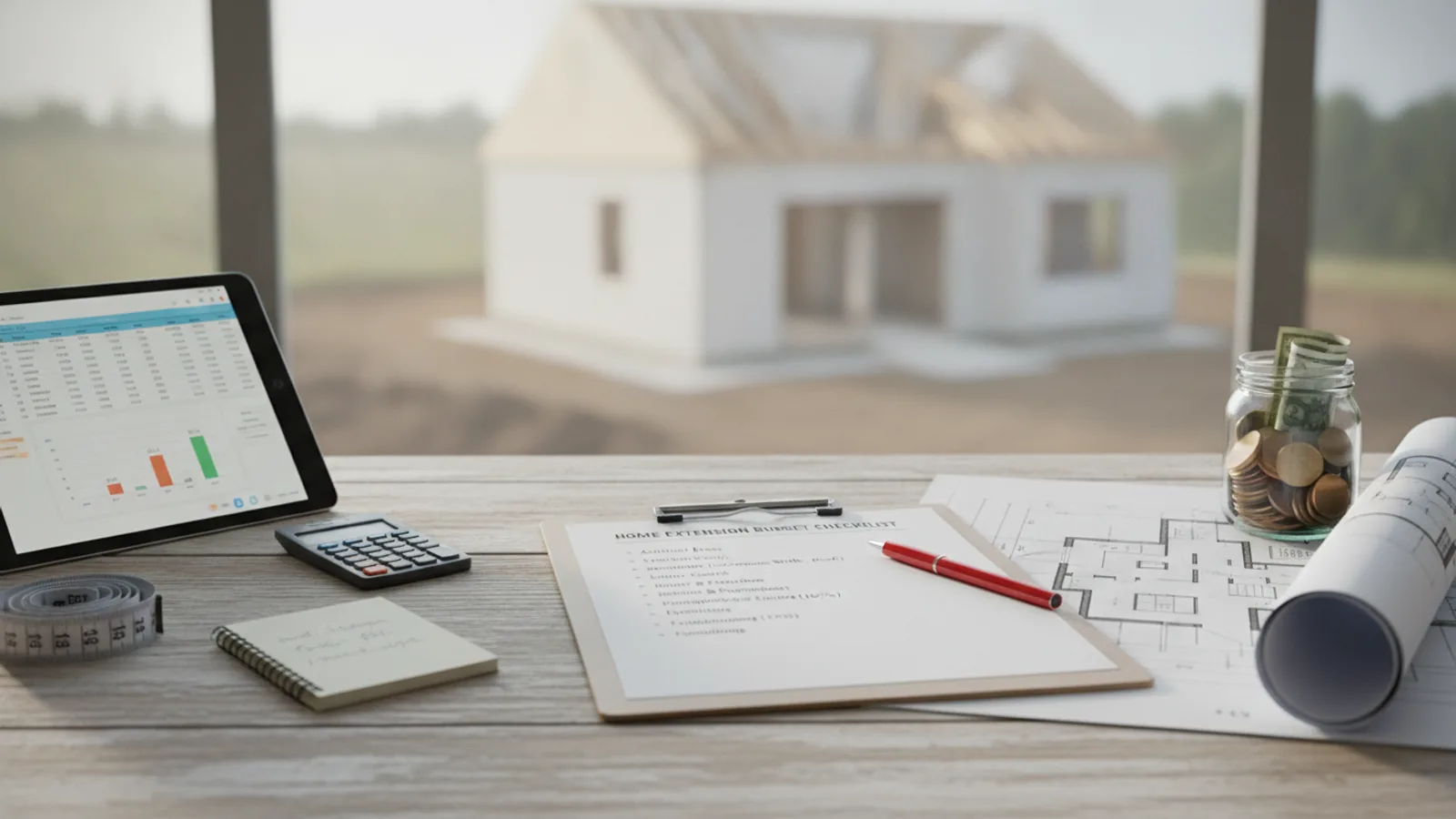
Home Extension Budget Checklist
This guide explains how to approach home extension budget checklist, including the preparation, practical steps, common mistakes, and final checks that help you finish with confidence.
Before You Start
Step-by-Step Instructions
Quick Reference
Common Problems When You Plan Your Home Extension Budget
Even with careful planning, budgeting for a home extension can throw up challenges. Being aware of these common problems can help you tackle them effectively.
Underestimating Hidden Costs
Many homeowners focus purely on the main building costs (labour and materials) and forget about the 'extras'. These include architect fees, structural engineer fees, planning permission and building control charges, Party Wall Agreement costs, VAT, skip hire, temporary accommodation, and even professional cleaning after the build. These can add 15-25% to your total budget if not properly accounted for.
Fix: Create a comprehensive list of all potential costs, including the often-forgotten ones mentioned in Step 5. Speak to your architect and builder about all fees involved, not just the construction itself. Always ask if quotes include or exclude VAT.
Not Having a Sufficient Contingency Fund
One of the biggest pitfalls is not setting aside enough, or any, money for unexpected problems. Issues like discovering asbestos, damp, poor foundations, or unmapped drains are common once work begins and can be costly to resolve. Without a contingency, these problems can halt your project or force you into debt.
Fix: Strictly allocate 10-15% of your total budget to a contingency fund. For larger, older, or more complex properties, you might even consider 20%. Only use this money for genuine, unavoidable problems, not for design upgrades or new desires.
Poor Communication with Your Builder
Misunderstandings about the scope of work, materials, or timelines can lead to 'variations' – changes to the original plan that almost always incur additional costs. If you're not clear about what's included in the quote, or if you make last-minute design changes, expect the budget to increase.
Fix: Ensure you have a detailed, written contract with your builder before work starts. This contract should specify the exact work, materials, timescales, and payment schedule. Any changes should be agreed upon in writing, with revised costs, before they are implemented. Regularly check in with your builder and clarify any doubts immediately.
Making Emotional Decisions
During a build, it's easy to get carried away by exciting design ideas or tempting upgrades. Deciding you "must have" that more expensive flooring or those premium bifold doors halfway through the project can quickly push you over budget.
Fix: Stick to your original vision and budget as much as possible. If you want upgrades, factor them into your initial budget. If you decide on a change, immediately assess its financial impact and be prepared to cut costs elsewhere or use your contingency (if it's truly essential and there's no other way). Maintain a disciplined approach.
Not Tracking Spending Regularly
A budget is only useful if you monitor it. Many people create a budget at the start but then fail to track their actual spending against it. This makes it impossible to identify overspends early or make necessary adjustments.
Fix: Use your budget spreadsheet as a live document. Input every cost as it occurs. Review it weekly or fortnightly. This proactive approach allows you to address budget creep before it becomes a major problem.
Advanced Tips for Your Home Extension Budget Checklist
Once you've mastered the basics, these advanced tips can help you optimise your home extension budget even further, potentially saving money or getting more for your investment.
Value Engineering Your Design
Work closely with your architect and structural engineer to explore alternative designs or materials that can achieve a similar aesthetic and functionality for less money. This is called 'value engineering'. For example, can a different foundation type be used? Are there standard-sized windows that offer significant savings over custom ones? Can you simplify roof structures without compromising design?
Action: Discuss cost-saving alternatives with your professionals during the design phase. A good architect understands how design choices impact construction costs and can suggest more budget-friendly options that still meet your needs.
Phased Building for Larger Projects
If your dream extension is very ambitious and exceeds your immediate budget, consider building it in phases. For example, complete the structural shell and core services first, then save up for the internal fit-out and high-end finishes. This allows you to spread the cost over a longer period and potentially use future income or savings.
Action: Plan with your architect for a phased approach. Ensure each phase can be completed safely and effectively, allowing for future expansion or completion without major rework.
Leverage Supplier Relationships and Bulk Buying
Your builder often has established relationships with suppliers and can get trade discounts on materials. However, for larger items or specific finishes, you might be able to negotiate discounts yourself, especially if you're buying in bulk or during sales periods. Coordinate with your builder to time material purchases effectively.
Action: Ask your builder about their supplier discounts. For certain items you want to source, research prices from various suppliers and don't be afraid to negotiate, especially for kitchens, bathrooms, or flooring if buying direct.
Explore Green Building Grants and Incentives
In some cases, specific energy-efficient upgrades might qualify for government grants or local council incentives, especially for improvements like insulation, heat pumps, or solar panels. While these might add to your initial build cost, they can significantly reduce running costs and sometimes offer direct financial support.
Action: Research current GB government schemes or local authority grants for energy-efficient home improvements. Discuss with your architect how to incorporate qualifying elements into your extension design.
DIY Where Appropriate and Safe
If you have specific skills and experience, consider doing some of the finishing work yourself, such as painting, tiling, or installing flooring. This can save on labour costs, but only undertake tasks you are genuinely competent and confident doing. Incorrect DIY can lead to costly rectifications.
Action: Clearly identify tasks you can safely and competently complete. Discuss this with your builder upfront to ensure it integrates seamlessly into their workflow and doesn't cause delays or issues with warranties.
Home Extension Budget Checklist FAQ
Here are answers to some common questions about budgeting for a home extension.
Q: How much does a home extension typically cost in the UK?
A: The cost varies greatly depending on size, location (London and South East are generally more expensive), materials, and finish quality. As a rough guide, a single-storey extension can range from £1,500 to £3,000+ per square metre. A two-storey extension might be slightly less per square metre due to shared foundation and roof costs, but more overall. This doesn't include VAT (20%) or professional fees, so always factor those in.
Q: What is a reasonable contingency percentage for an extension budget?
A: A minimum of 10% of your total project cost is highly recommended. For older properties, complex designs, or if you're undertaking significant structural work, a 15% or even 20% contingency might be more appropriate. This fund covers unforeseen issues like discovering asbestos, drainage problems, or unexpected structural repairs.
Q: Should I include VAT in my budget?
A: Yes, absolutely. VAT (Value Added Tax) is currently 20% in GB and applies to most building materials and labour. Always clarify with your builder whether their quote is "plus VAT" or "inclusive of VAT." If it's not included, you need to add 20% to their quoted price.
Q: Can I save money by project managing the extension myself?
A: You can potentially save on project management fees if you have the time, knowledge, and experience. However, it's a significant commitment involving coordinating trades, managing timelines, and problem-solving. If you lack experience, it can lead to delays, errors, and ultimately cost more due to stress, mistakes, or extended timeframes. Consider it carefully; for most, a reputable builder who manages the project is worth the cost.
Q: What's the difference between planning permission fees and building control fees?
A: Planning permission fees are paid to your local council for permission to carry out certain types of development. This checks if your proposed extension aligns with local planning policies. Building control fees are paid to ensure your extension meets building regulations for safety, energy efficiency, and structural integrity. Both are mandatory requirements for most extensions in GB.
Q: Is it cheaper to build a single-storey or two-storey extension?
A: A single-storey extension will generally have a lower overall cost. However, a two-storey extension often offers better value per square metre. This is because the cost of foundations and roofing, which are significant expenses, are spread over two levels of living space instead of one. If you need a lot of extra space, a two-storey option might give you more for your money in the long run.
Final Checklist for Your Home Extension Budget
Use this checklist to ensure you've covered all the essential aspects of your home extension budget before and during your project.
- ✓ Vision Defined: Have you clearly outlined your extension's purpose, size, and desired finishes?
- ✓ Initial Research Complete: Do you have a rough idea of costs per square metre in your area?
- ✓ Professional Quotes Gathered: Do you have at least three detailed, written quotes for architects, structural engineers, and builders?
- ✓ Budget Spreadsheet Created: Is every cost category itemised, including materials, labour, and fittings?
- ✓ Hidden Costs Accounted For: Have you budgeted for planning fees, building control, Party Wall Agreements, and insurance?
- ✓ VAT Clarified: Is it clear whether all quotes include or exclude 20% VAT?
- ✓ Contingency Fund Allocated: Have you set aside 10-15% of your total budget for unexpected issues?
- ✓ Funding Secured: Is your financing arranged and approved before work begins?
- ✓ Payment Schedule Agreed: Do you have a written contract with your builder detailing milestone payments?
- ✓ Tracking Plan in Place: Will you regularly monitor actual spending against your budget?
- ✓ Communication Strategy: Are you prepared to communicate clearly and frequently with your builder about costs and changes?
- ✓ Decision Process: Do you have a plan for making cost-related decisions if issues arise?