Home Extension Lighting Guide
A practical step-by-step guide to home extension lighting guide, including preparation, instructions, common issues, tips, and next steps.
Home Extension Lighting Guide
This guide explains how to approach home extension lighting guide, including the preparation, practical steps, common mistakes, and final checks that help you finish with confidence.
Before You Start
Step-by-Step Instructions
Quick Reference
Common Problems When You Plan Home Extension Lighting
Even with careful planning, it's easy to run into common issues. Knowing what these are can help you avoid them.
- Not enough light: This often happens when only ambient lighting is considered, or fixtures are too widely spaced.
- Too much glare or harsh light: Bright, exposed bulbs or poorly chosen colour temperatures can create an uncomfortable environment.
- Poorly placed switches: Switches located inconveniently (e.g., behind a door, far from entry points) make using the lighting frustrating.
- Ignoring natural light: Failing to account for how daylight enters the room can lead to over-lighting or areas that remain dim despite artificial lights.
- Budget overruns: Overlooking the cost of fixtures, bulbs, and professional installation can quickly escalate expenses.
- Lack of flexibility: Not including dimmers or multi-circuit options can leave you with a single, unchangeable lighting mood.
Practical Fixes:
- Increase Light: Review your ambient and task lighting. Can you add more fixtures, or use bulbs with higher lumen output? Consider portable lamps to supplement.
- Reduce Glare: Choose fixtures with diffusers, use dimmer switches, or opt for indirect lighting where light bounces off a surface before entering the room. Experiment with warmer colour temperatures.
- Optimise Switches: While rewiring is expensive, smart home systems or wireless switches can offer solutions for inconveniently placed controls. Plan future switch locations more carefully.
- Balance Light: During the day, rely on natural light. At night, ensure artificial light fills gaps. Use lighter finishes on walls and ceilings to reflect light.
- Manage Budget: Prioritise essential lighting. Research cost-effective, energy-efficient LED options. Get multiple quotes from electricians and stick to your plan.
- Add Flexibility: Install dimmer switches wherever possible. For existing installations, smart bulbs can often add dimming and colour temperature adjustment capabilities.
Advanced Tips for Home Extension Lighting
To truly elevate your extension's lighting, consider these advanced concepts:
- Smart Home Integration: Incorporate smart bulbs, switches, or a full smart home system. This allows for scheduled lighting, remote control, voice activation, and the creation of custom "scenes" (e.g., "Dinner Party" scene dims ambient lights, highlights accent lights). This offers unparalleled flexibility and convenience.
- Understanding Colour Temperature (CCT): Don't just pick "white light." Colour temperature, measured in Kelvin (K), significantly impacts mood. Warm white (2700K-3000K) creates a cosy, inviting atmosphere suitable for living areas and bedrooms. Cool white (3500K-4000K) is brighter and more stimulating, ideal for kitchens, bathrooms, or home offices. Consider using different CCTs for different zones or even within the same zone using tunable white smart bulbs.
- Dynamic Layering and Scenes: Go beyond simply turning lights on and off. Design lighting scenes where multiple layers work together to create a specific mood. For instance, a "Relax" scene might have dimmed ambient light and soft accent lighting, while a "Work" scene would have bright task lighting combined with moderate ambient light.
- Cove and Pelmet Lighting: Install LED strips hidden within architectural features like coving (near the ceiling) or pelmets (above windows). This creates a soft, diffused, indirect light that washes walls or ceilings, adding depth and a sense of luxury without visible fixtures. It's excellent for ambient lighting.
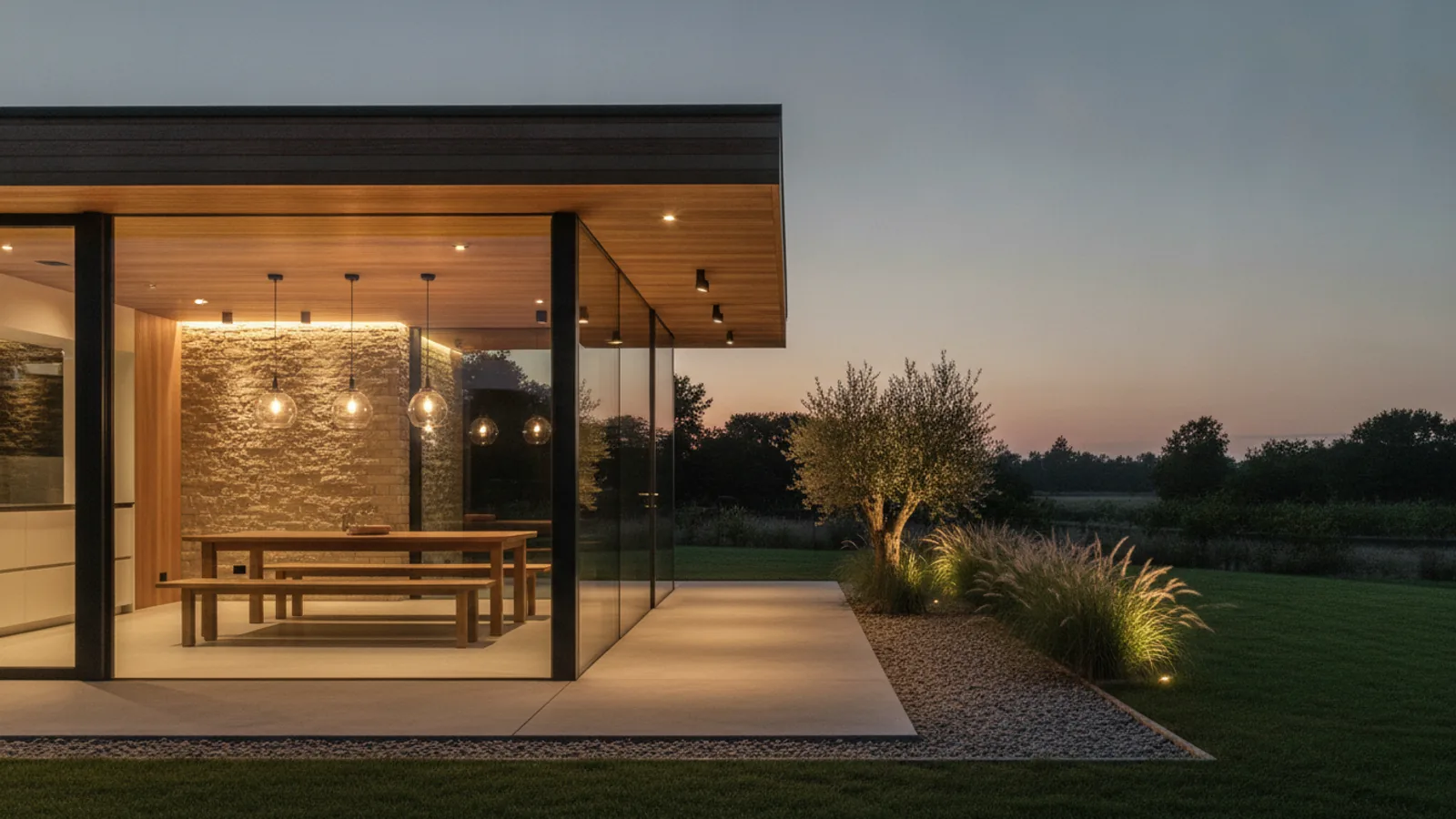
- Integrated Outdoor Lighting: Extend your lighting design seamlessly from inside to outside. Use weather-rated outdoor lights to illuminate patios, pathways, and garden features adjacent to your extension. This blurs the lines between indoor and outdoor living, making your extension feel larger and more connected to its surroundings.
- Lighting for Wellness: Consider how lighting impacts wellbeing. Using circadian lighting (which mimics natural daylight cycles by changing colour temperature throughout the day) can support natural rhythms, particularly in extensions with limited natural light.
Home Extension Lighting Guide FAQ
Here are answers to some frequently asked questions about lighting your home extension.
Q: What is the most important aspect of home extension lighting?
A: The most important aspect is creating a layered lighting design that considers the function and mood of each zone, combined with a robust and compliant electrical plan. Ignoring either can lead to an uncomfortable or unsafe space.
Q: Do I need to hire a lighting designer for my extension?
A: Not always. For simpler extensions, a good architect and a qualified electrician can often guide you sufficiently. However, for complex open-plan spaces, extensions with unique features, or if you want a truly sophisticated lighting scheme, a professional lighting designer can be a worthwhile investment. They can offer expertise in aesthetics, energy efficiency, and control systems.
Q: What is 'Part P' and why is it important for my extension?
A: Part P refers to Part P of the Building Regulations (England and Wales). It's a legal requirement that ensures most electrical installation work in homes is carried out by persons competent to do the work and inspected to ensure it is safe. Any new electrical circuits, or significant alterations in your extension, must comply with Part P, usually requiring notification to your local authority and certification from a registered electrician.
Q: How can I make my extension lighting energy efficient?
A: The best way is to use LED bulbs for all your fixtures; they use significantly less energy and last much longer than traditional bulbs. Additionally, incorporating dimmer switches, motion sensors (in less used areas like utility rooms), and making the most of natural daylight will further reduce energy consumption.
Q: How many spotlights do I need for my extension?
A: There's no single answer, as it depends on factors like room size, ceiling height, desired brightness, and the beam angle of the spotlights. A very rough guide is one spotlight per 1.5 to 2 square metres for general ambient lighting. However, for an accurate plan, it's best to consult your electrician or a lighting designer who can calculate the required lumen output for your specific space and needs.
Final Checklist for Home Extension Lighting Guide
Before you finalise your plans and start building, run through this checklist to ensure you've covered all the key aspects of your home extension lighting:
- Have you clearly defined the purpose and activities for each area in your extension?
- Have you planned for all three lighting layers: ambient, task, and accent lighting?
- Is your natural light strategy (windows, skylights) considered in the overall design?
- Have you discussed your complete lighting and electrical plan with a qualified, registered electrician?
- Are all light switch and electrical socket locations practical, convenient, and logically placed?
- Have you included dimmer switches for flexibility in controlling light levels and mood?
- Are your chosen lighting fixtures and bulbs energy-efficient, preferably LED?
- Are you familiar with GB electrical safety regulations (Part P) and assured your electrician will comply?
- Have you allocated a realistic budget that covers both fixtures and professional installation costs?
- Is there a plan for any outdoor lighting around the extension that complements the interior?
- Have you considered the colour temperature of your bulbs and how it impacts the mood of each area?
- Have you planned for any smart home integration or advanced control systems if desired?
FAQ
What should I check before I start?
Check the goal, the key prerequisite, and any current instructions that could change the safest next step for home extension lighting guide.
How can I tell whether the result is working?
Use the practical checks in the guide, pause if a required step is unclear, and verify the finished result against the intended outcome.