Home Extension Storage Ideas
A practical step-by-step guide to home extension storage ideas, including preparation, instructions, common issues, tips, and next steps.
Home Extension Storage Ideas
This guide explains how to approach home extension storage ideas, including the preparation, practical steps, common mistakes, and final checks that help you finish with confidence.
Before You Start
Step-by-Step Instructions
Quick Reference
Common Problems When Planning Home Extension Storage Ideas
Problem: Underestimating Actual Storage Needs
Many homeowners find that after their extension is complete, they still don't have enough storage, or the storage they have doesn't fit what they need to store. This often happens because the initial assessment of items was too general, or future needs weren't considered.
Solution: Conduct a meticulous inventory of everything you own, item by item, focusing on what causes clutter now and what you anticipate needing in the future. Go room by room in your current home and list items by frequency of use and size. Don't forget seasonal items, hobbies, or children's toys that might grow with them. If possible, sort items into "keep," "donate," and "discard" piles before planning, to avoid storing things you no longer need.
Problem: Blocking Natural Light or Obstructing Views
In the excitement of adding storage, it's easy to place tall units or large pieces of furniture in front of windows or vital sightlines. This can make the extension feel dark, cramped, and negate one of the primary benefits of adding an extension: more light and space.
Solution: Prioritise natural light and views during your planning phase. Use low-profile storage beneath windows, opt for wall-mounted shelving that doesn't reach the ceiling, or choose open shelving where appropriate. Consider furniture with glass fronts or lighter colours to maintain an airy feel. Always mark windows and door openings clearly on your floor plans and avoid placing any permanent, solid storage taller than windowsill height in these areas.
Problem: Poor Accessibility and Usability of Storage
Storage is only truly effective if you can easily access and use the items within it. Designing deep cupboards without pull-out mechanisms or placing frequently used items on high shelves can lead to frustration and items being forgotten or difficult to retrieve.
Solution: Design storage with functionality in mind. For deep cabinets, incorporate pull-out drawers, baskets, or swing-out mechanisms. Place everyday items at eye-level or within easy reach. Reserve higher shelves or less accessible areas for items used only a few times a year. In a kitchen extension, consider pantry solutions that slide out entirely. In wardrobes, use adjustable rails and shelves to adapt to different clothing lengths and types, ensuring everything is visible and accessible.
Advanced Tips for Home Extension Storage Ideas
Home Extension Storage Ideas FAQ
Q: What's the best type of storage for a kitchen extension?
A: For kitchen extensions, integrated storage is often preferred. Think about pull-out larder units for food, deep drawers with internal dividers for pots and pans, corner solutions like 'Le Mans' units for tricky spaces, and wall-mounted cabinets that go to the ceiling for less-used items. Don't forget a dedicated waste and recycling station, preferably integrated into a cupboard.
Q: How can I hide clutter in an open-plan extension?
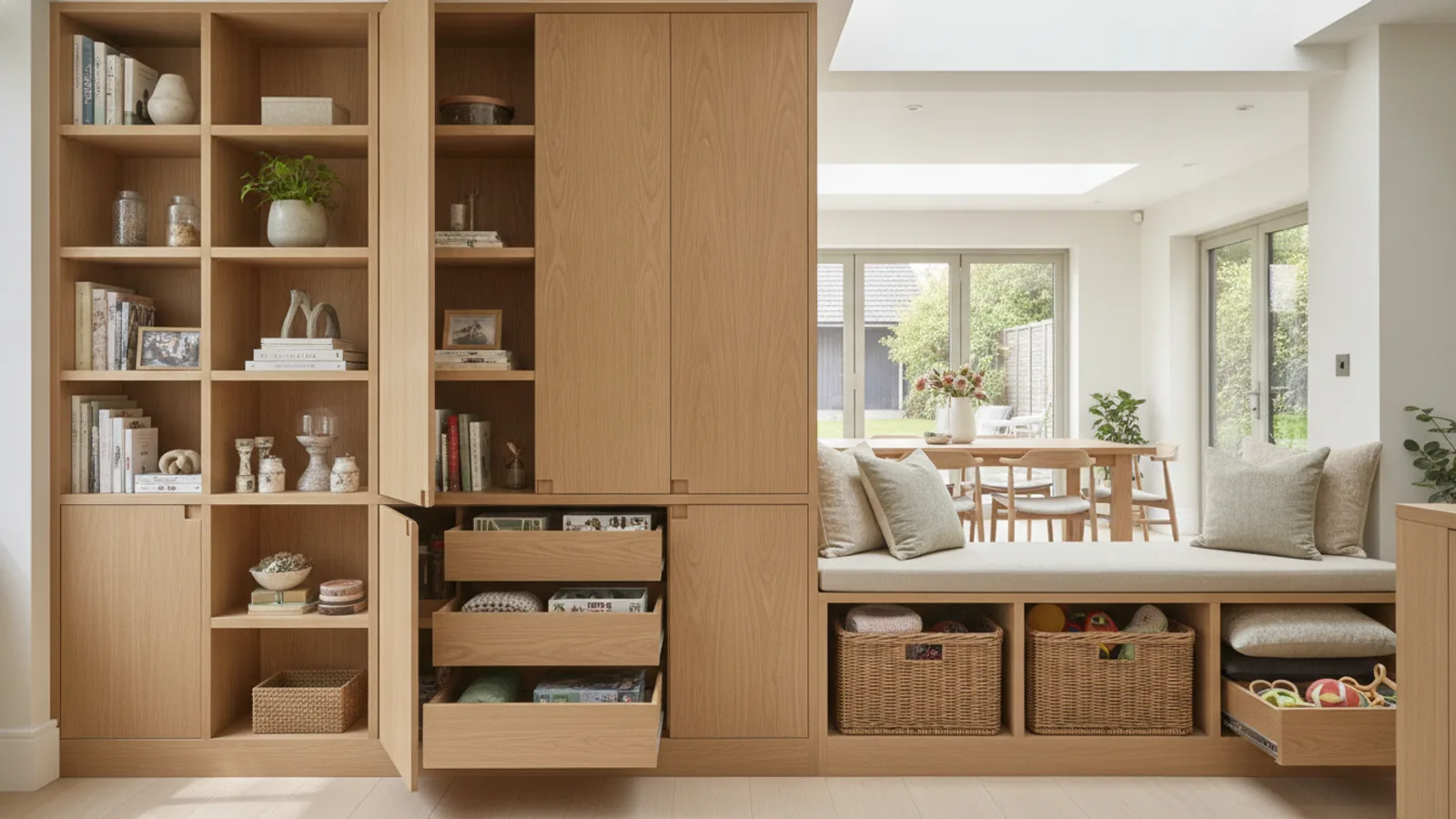
A: In open-plan extensions, the key is discreet and integrated storage. Use built-in cabinetry that blends with the walls, storage benches or ottomans that double as seating, and media units with doors to conceal electronics. Room dividers can also incorporate shelves or cupboards. The goal is to keep everyday items out of sight to maintain a clean, uncluttered aesthetic.
Q: Should I include storage in the initial building plans for my extension?
A: Absolutely, yes. Integrating storage into the initial building plans is highly recommended. It allows for seamless design, maximises space efficiency (e.g., building into wall cavities or under stairs), and can be more cost-effective as it avoids retrofitting. Discuss your storage needs with your architect and builder from the very start of the design process.
Q: What are some cost-effective home extension storage solutions?
A: Cost-effective solutions include open shelving, using freestanding furniture you already own or can acquire second-hand (and perhaps upcycle), and DIY options like building simple cubbyholes or adding basic hooks and rails. Making use of vertical space with affordable wall-mounted units and investing in good internal organisers (bins, baskets) can also be very budget-friendly while making a big difference.
Final Checklist for Home Extension Storage Ideas
- ✓ All current and future storage needs have been thoroughly assessed.
- ✓ The extension space has been accurately measured and mapped, considering all architectural features.
- ✓ Decisions on built-in versus freestanding storage have been made for each area.
- ✓ Vertical space has been maximised with tall units or high shelving where appropriate.
- ✓ Multifunctional furniture pieces have been considered to combine storage with other uses.
- ✓ Storage solutions are designed to blend seamlessly with the extension's overall decor.
- ✓ Storage has been planned specifically for each functional zone within the extension (e.g., kitchen, living, utility).
- ✓ Awkward spaces (under stairs, sloped ceilings, corners) have been identified and optimised for storage.
- ✓ Internal organisers (dividers, bins, pull-outs) have been selected for drawers and cabinets.
- ✓ Storage plans comply with all local GB building regulations and safety standards.
- ✓ The overall storage plan has been reviewed, and adjustments have been made based on practical considerations.